If you’ve ever heard “the cleaning is done” and still walked into a dusty, chaotic site (or worse: a space that looks clean but fails inspection), you’re seeing the most common closeout mistake: confusing rough clean vs final clean.
That confusion isn’t just semantics. It leads to rework, damaged finishes, extra labor, and inspection delays—because each phase has a different purpose, timing, and standard.
Rough Clean vs Final Clean: the simple definition
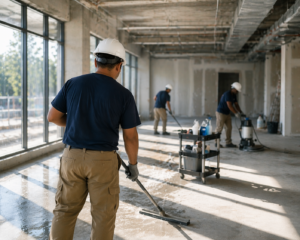
Rough Clean is the first heavy stage of post-construction cleaning. It focuses on bulk debris, heavy dust, and jobsite functionality—so crews can move safely and progress efficiently.
Final Clean happens after finishes and final work are complete. It’s the detailed, inspection-ready clean designed for walkthroughs, handoff, and occupancy readiness.
Understanding this “rough clean vs final clean” split is what prevents the “we cleaned… then it got destroyed” cycle.
What is a Rough Clean?
A rough clean is the “control and reset” phase. The site may still be active, but the goal is to remove the heavy mess so the job becomes safer, clearer, and easier to manage.
Rough Clean typically includes
- removal of bulk debris and loose construction waste (as defined in scope);
- sweeping/vacuuming to reduce heavy dust layers on floors;
- basic wipe-downs of accessible surfaces to limit dust spread;
- clearing pathways and work areas so teams can keep moving.
Rough Clean is NOT
- a detail clean;
- a “ready for client photos” clean;
- a substitute for final inspection preparation.
What is a Final Clean?
A final clean is the “handoff standard” phase. It’s done when trades are finished (or only minimal punch work remains), and the focus shifts from “functional site” to “finished property.”
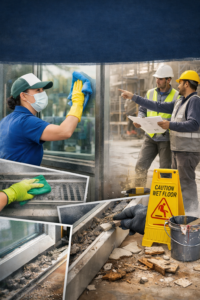
Final Clean typically includes
- fine dust removal from surfaces, trim, corners, and finish areas;
- detailed cleaning of kitchens/bathrooms and high-touch areas;
- glass, fixtures, and floors cleaned/polished for presentation;
- a QC-style walkthrough to catch what would stand out in inspection or turnover.
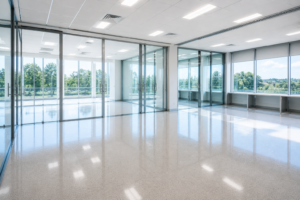
Final clean is where the project stops looking like a jobsite and starts looking like a completed space.
Rough Clean vs Final Clean: side-by-side (what construction teams need)
1) Timing
- Rough Clean: late build phase, when heavy mess is no longer increasing daily;
- Final Clean: after finishes are in and the space is truly approaching turnover/inspection.
2) Goal
- Rough Clean: safer site, controlled debris/dust, workable conditions;
- Final Clean: inspection-ready presentation and move-in readiness.
3) Risk if you mix them up
- Final Clean too early: re-cleaning, scuffed finishes, dust settling again, wasted labor;
- Rough Clean too late: debris/dust interferes with finishing trades and slows closeout.
Why this confusion causes damage, rework, and failed inspections
Most jobsite frustration comes from one thing: expectation mismatch.
When a final clean is scheduled while trades are still sanding, cutting, drilling, painting, or moving materials through finished areas, the site will “re-soil” immediately—often causing:
- scratches on floors and fixtures;
- dust embedded in fresh paint/caulk lines;
- repeated labor cycles (“we already did it”);
- a space that reads as unfinished during walkthroughs.
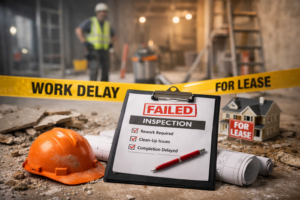
And from an inspection standpoint, a “not truly final” clean reduces clarity: dust, debris, and haze can mask details or create the impression of incomplete work.
How to schedule it correctly (a practical rule)
If you want one simple standard for “rough clean vs final clean,” use this:
Schedule Rough Clean when
- major debris is present and needs removal for safe progress;
- heavy dust control will prevent contamination of finish areas;
- you need the site functional for the next stage.
Schedule Final Clean when
- finishes are installed and protected;
- trade traffic is minimal and controlled;
- you’re approaching inspection, walkthrough, or turnover.
If active dusty work is still happening daily, it’s usually not final-clean timing yet.
How Be Clean prevents scope confusion on real projects
Be Clean approaches post-construction cleaning as a structured, checklist-based process—so the cleaning phase matches the build phase.
- On-site consult + direct communication to align scope and timing;
- custom checklist per project so crews execute consistently;
- proactive follow-through so issues are addressed quickly instead of turning into rework.
Serving the Greater Michiana Area (IN & MI), Be Clean supports construction teams with commercial and post-construction cleaning designed for closeout success.
FAQ: Rough Clean vs Final Clean
Is rough clean the same as “broom clean”?
Not always. “Broom clean” is often used loosely and can mean very basic debris removal. Rough clean is typically a fuller first-phase cleanup—always confirm scope in writing.
Can final clean happen before punch list is complete?
It can, but it usually creates re-cleaning risk. Many teams plan final clean when punch work is minimal and trade traffic is controlled.
Do we need both rough clean and final clean?
Most projects benefit from both because they solve different problems: rough clean stabilizes the site; final clean protects handoff and inspection readiness.
Why this difference protects your schedule
Knowing the difference between rough clean vs final clean is one of the simplest ways to avoid avoidable losses in closeout: less rework, fewer touch-ups, fewer surprises, and a stronger final impression.
If your team wants a cleaning partner who aligns phase, scope, and standards from the start, Be Clean can help you plan the correct cleaning stage and deliver a consistent result.
Ready to define the right phase for your jobsite?
Request a consultative walkthrough and a checklist-based quote.