A Strategic Framework for Facility Managers, Operations Leaders & Business Owners
A well-structured commercial cleaning program helps facilities stay spotless, safe, and truly professional while supporting long-term organizational performance.
This article outlines the best practices for commercial cleaning services that high-performance facilities use to reduce operational risks, maintain hygiene standards, and achieve consistent results — especially within the Greater Michiana Area.
1. Start With a Facility-Specific Assessment
Every high-performing commercial cleaning program begins with a technical evaluation of the facility. This assessment should include:
- Foot traffic patterns (high-use vs low-use zones)
- Material types (vinyl, epoxy, stone, LVT, etc.)
- Air quality risk points (HVAC intake, vents)
- Sensitive and compliance-critical areas (restrooms, breakrooms, entry points)
- Operational schedules and disruption tolerances
A tailored assessment ensures the commercial cleaning plan aligns with the facility’s actual needs rather than applying generic routines. According to facility best practice guides, establishing a cleaning schedule based on specific site conditions helps cover all critical areas consistently and effectively.
2. Build a Structured Cleaning Cycle
Consistency separates professional commercial cleaning from ad-hoc efforts. The most effective programs operate on predictable cycles:
Daily Tasks — Health & First Impressions
- Disinfect high-touch surfaces (door handles, railings)
- Lobby and entrance care
- Restroom sanitation
- Light floor cleaning and trash removal
Weekly Tasks — Mid-Level Maintenance
- High- and low-dust removal
- Workspace detail cleaning
- Spot-cleaning of walls and partitions
- Interior glass touch-ups
Monthly Tasks — Deep Upkeep
- HVAC vent and grille cleaning
- Upholstery sanitation
- Deep floor sanitation and polishing
- Detailed cleaning of door frames, baseboards, and hard-to-reach surfaces
These cycles support operational flow while keeping the environment hygienic, safe, and professional — a key factor in lowering employee absenteeism and improving performance.
3. Focus on High-Traffic and High-Touch Zones
High-traffic and high-touch areas have the greatest impact on facility safety and perception. These zones include:
- Entrances and reception areas
- Elevators and stairwells
- Restrooms and breakrooms
- Conference rooms and waiting areas
- Hallways and transition spaces
Targeting cleaning efforts in these zones promotes hygiene, minimizes risk, and supports daily operational continuity.
Research has shown that targeted cleaning in high-contact areas significantly reduces germ buildup and contributes to a healthier work environment.
4. Use the Right Products and Techniques
Not all cleaning agents are equal — especially in commercial environments where surfaces vary and regulatory standards may apply:
- Choose disinfectants and sanitizers aligned with health guidelines
- Match cleaning products to surface materials to avoid damage
- Apply ergonomic cleaning tools and methods to enhance efficiency and reduce worker strain
A technical selection of products and methods safeguards sensitive materials and supports long-term maintenance.
5. Train and Equip Your Cleaning Team
Professional commercial cleaning depends on people who know how to apply best practices, understand safety protocols, and communicate effectively.
Training should cover:
- Proper chemical handling and safety protocols
- Surface-specific cleaning techniques
- Use of protective equipment and ergonomic practices
- Reporting and communication of facility issues
Investing in training increases performance and helps ensure that cleaning contributes positively to safety and regulatory compliance.
6. Implement Quality Control and Documentation
Consistent quality doesn’t happen by chance — it requires:
- Checked cleaning schedules with documentation
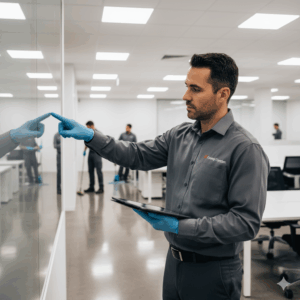
- Routine inspections by supervisors
- Corrective action logs and follow-up
- Feedback loops that allow for improvement
Documentation also supports compliance with health and safety guidelines and creates a record of cleaning performance over time.
7. Align Cleaning With Operational Goals
Effective commercial cleaning integrates with broader operational priorities:
- It enhances employee well-being, reducing infections and illness-related absenteeism.
- It supports customer trust and brand perception in client-facing environments.
- It prolongs the lifespan of assets and reduces long-term maintenance costs.
The right cleaning program becomes not just a facility task, but a strategic partner in achieving business goals.
8. Monitor Air Quality and Indoor Environments
Indoor air quality (IAQ) directly influences worker health and comfort. Poor air quality can lead to respiratory irritation, lack of concentration, and increased sick days.
Facility managers should consider:
- Regular HVAC filtration checks
- Dust and particulate control protocols
- Cleaning sequences that avoid re-contamination
- Monitoring IAQ metrics over time
Linking commercial cleaning with air quality maintenance increases facility safety and supports long-term workforce productivity.
Why These Best Practices Matter
Professional commercial cleaning done through structured systems, customized cleaning plans, and proactive communication delivers:
- Higher workplace safety and hygiene
- Reduced operational risk
- Improved employee satisfaction and productivity
- Stronger compliance with health standards
- Better client and visitor impressions
In the Greater Michiana Area, businesses that adopt these practices differentiate themselves by ensuring environments that are clean, efficient, and prepared for the demands of modern commercial operations.
Ready to Elevate Your Commercial Cleaning Program?
At Be Clean, we provide professional commercial cleaning services designed around structured cleaning cycles, customized plans, proactive communication, and quality control. Serving South Bend, Elkhart, Goshen, Niles, Michigan City, and surrounding areas, we help facilities stay safe, efficient, and inspection-ready.
👉 Schedule a facility assessment and get a customized cleaning plan that aligns with your operational goals.