A Technical Framework for Builders, General Contractors & Project Managers
Post-construction cleaning is a critical operational phase that directly affects inspection outcomes, project timelines, client satisfaction and brand reputation.
Incomplete or poorly sequenced cleaning leads to failed inspections, damaged finishes, extended punch lists, costly rework and delayed turnover. For builders and project managers, this creates unnecessary friction, risk exposure and margin erosion.
A structured post-construction cleaning checklist ensures that every site is delivered inspection-ready, operationally safe and professionally presented.
Below is the technical checklist every builder and PM should follow before scheduling a walkthrough or final inspection.
1. Verify Site Readiness Before Cleaning Begins
Cleaning should never start before the site is operationally ready.
Confirm that:
- All major construction activities are complete
• Power, water and lighting are functional
• HVAC is installed and operational (or safely isolated)
• Permanent floors, glass, fixtures and finishes are installed
• Debris, large materials and waste have been removed
Starting cleaning before the site is ready increases the risk of re-contamination, surface damage and duplicated work.
2. Confirm the Correct Cleaning Stage Is Being Applied
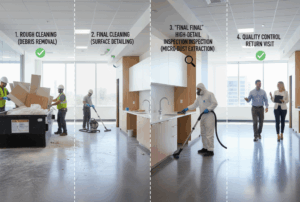
Post-construction cleaning is not a single event. It follows defined stages:
Rough Clean
Removes heavy debris, dust, construction residue and prepares the space for finishing trades.
Final Clean
Detailed cleaning of all visible surfaces, floors, fixtures, glass and casework in preparation for inspection.
Final Final Clean
Inspection-level detailing, touch-ups, interior cabinetry, corner work, residue removal and verification passes.
Return Visit (if needed)
Final dust settlement removal and presentation cleanup before owner turnover.
Skipping or blending stages increases failure risk.
3. Protect New Finishes During Cleaning
Most post-construction damage happens during cleaning — not construction.
Verify:
- Floor protection is used where needed
• Proper equipment is selected for each surface
• No abrasive pads, dirty mops or contaminated cloths are used
• Heavy equipment is kept off finished floors
• Glass is cleaned with non-abrasive, residue-free methods
Scratches on new floors, streaked glass and damaged surfaces often result from improper cleaning methods — not poor construction.
4. Control Dust and Airborne Particles
Construction dust is the primary cause of:
- Failed IAQ (Indoor Air Quality) assessments
• Visible residue after walkthroughs
• HVAC contamination
• Ongoing settling after cleaning
Ensure that:
- HEPA filtration is used when required
• Vents, grilles and returns are cleaned or protected
• Horizontal surfaces are dust-free before vertical cleaning
• Final cleaning is sequenced after dust-producing trades are complete
Exposure to construction dust and health impacts
5. Validate High-Risk and High-Visibility Areas
Before inspection, verify cleanliness in:
- Restrooms and locker rooms
• Lobbies, entrances and reception
• Glass, partitions and display surfaces
• Breakrooms and kitchens
• Stairwells, elevators and corridors
• Mechanical rooms and utility areas
• Cabinet interiors and storage spaces
These areas disproportionately influence inspection perception and client confidence.
6. Perform a Punch List Review Before the Official Walkthrough
Conduct a pre-inspection review focusing on:
- Smudges, residue and streaks
• Adhesive marks and labels
• Paint splatter or construction residue
• Dust accumulation on high or hidden surfaces
• Incomplete or inconsistent areas
This prevents avoidable punch list additions and protects project timelines.
7. Document and Communicate Any Issues Immediately
If damage, defects or irregularities are found:
- Photograph and document clearly
• Report immediately to the PM or GC
• Distinguish between cleaning issues and construction issues
• Log resolution actions
Proactive communication prevents blame, confusion and project delays.
8. Verify Inspection-Readiness Before Scheduling
Do not schedule inspection or turnover unless:
- All cleaning stages are complete
• All punch list items are addressed
• Dust is controlled and settled
• Floors, glass and surfaces are fully finished
• The space reflects final presentation standards
Inspection readiness is a process — not a moment.
Why This Checklist Matters
A structured post-construction cleaning checklist:
- Reduces failed inspections
• Prevents surface damage and rework
• Shortens punch lists
• Protects builder reputation
• Improves client confidence
• Supports faster turnover
Cleaning is not the end of the project — it is the bridge between construction and operation.
How Be Clean Supports Builders and PMs
At Be Clean, our post-construction cleaning services are engineered around this checklist.
Since 2019, we’ve supported builders, general contractors and project managers across the Greater Michiana Area with structured, multi-stage post-construction cleaning designed for inspection success, surface protection and predictable delivery.
Our process includes:
- On-site operational assessments
• Multi-stage cleaning systems
• Surface-specific methods
• Dust and residue control
• Punch list support
• Quality control inspections
• Proactive issue communication
We don’t just clean sites — we prepare them for inspection, turnover and long-term performance.
Ready to deliver inspection-ready projects with less risk and rework?
Our structured process helps builders and PMs reduce risk, protect finishes and deliver projects that pass inspection the first time.
Schedule a site assessment and receive a customized post-construction cleaning plan built around your project timeline, materials and inspection requirements.