Post-construction work requires more than a final touch
In many projects across the Greater Michiana Area, site preparation is still treated as the very last item on the checklist.
But experienced Project Managers, General Contractors, and Builders know that final presentation affects much more than appearance. It influences inspections, turnover, timelines, and the client’s overall perception of the project.
When this phase is rushed or poorly executed, the result is often:
- failed walkthroughs
- rework
- delays
- avoidable frustration
That is why a Multi-Stage Cleaning Process matters. A structured approach reduces risk and helps deliver a site that is truly ready for handoff.
What is a multi-stage process?
A Multi-Stage Cleaning Process is a structured method used in Post-Construction Cleaning to prepare a site in clearly defined phases.
Instead of trying to handle everything at once, each stage has a specific objective. This creates better consistency, stronger quality control, and a more reliable final result.
It is the foundation of:
- Structured Systems
- Inspection-Oriented
- Inspection-Ready
The 4 essential stages
1. Rough stage
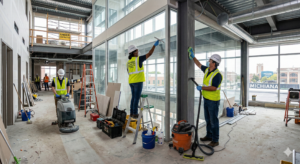
This first phase removes debris, residue, and heavy dust left behind by construction activity.
It creates the foundation for everything that follows. Without it, particles continue spreading through the space and compromise the next steps. This is also why proper site organization and debris removal matter so much in construction environments, as reflected in construction housekeeping standards from OSHA.
2. Final preparation
At this point, the project begins to look complete.
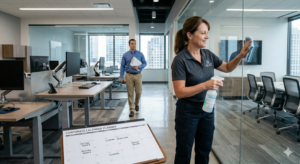
Attention is directed to floors, glass, fixtures, visible surfaces, and presentation areas that will be seen during walkthroughs.
This stage is especially important for Business Owners and Facility Managers, because it shapes first impressions immediately.
3. Detailed finishing
This is where precision matters most.
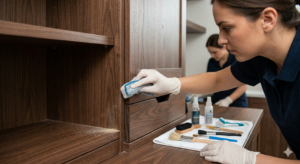
Corners, edges, cabinets, drawers, and less visible surfaces require a High-Attention to Detail approach. These are the areas that often determine whether a project feels complete or not.
Detail work also supports a healthier indoor environment by helping control fine dust and residual particles. For that reason, practices related to dust containment, ventilation, and pollutant control are an important part of indoor air quality during renovation, as highlighted by the EPA.
4. Quality control and touch-up
The last phase confirms that the space meets expectations before delivery.
With proper Quality Control Inspections, final corrections can be made before the owner, inspector, or operations team steps in.
Why a one-step approach creates problems
Trying to do everything in one pass usually leads to inconsistent results.
Dust settles again. Small details get overlooked. Walkthrough standards are missed. What looked finished no longer feels ready.
That is why experienced teams prefer partners with Structured Cleaning Systems, defined workflows, and clear accountability.
How Be Clean approaches the process
At Be Clean, every project begins with On-Site Assessments and moves forward with Customized Cleaning Plans based on the real conditions of the site.
Our team supports:
- Project Managers
- General Contractors
- Facility Managers
- Business Owners
with a process designed to improve readiness, reduce surprises, and support smoother project delivery.
This includes:
- phased execution
- detailed checklists
- Proactive Communication
- final verification before handoff
The real value of a structured system
A strong process helps:
- reduce rework
- improve inspection outcomes
- protect timelines
- support a better final presentation
In other words, this is not just about appearance. It is about delivering with confidence.
Serving the Greater Michiana Area
Be Clean provides Post-Construction Cleaning and Commercial Cleaning Services throughout the Greater Michiana Area, helping teams achieve reliable, high-standard results with consistency and professionalism.